

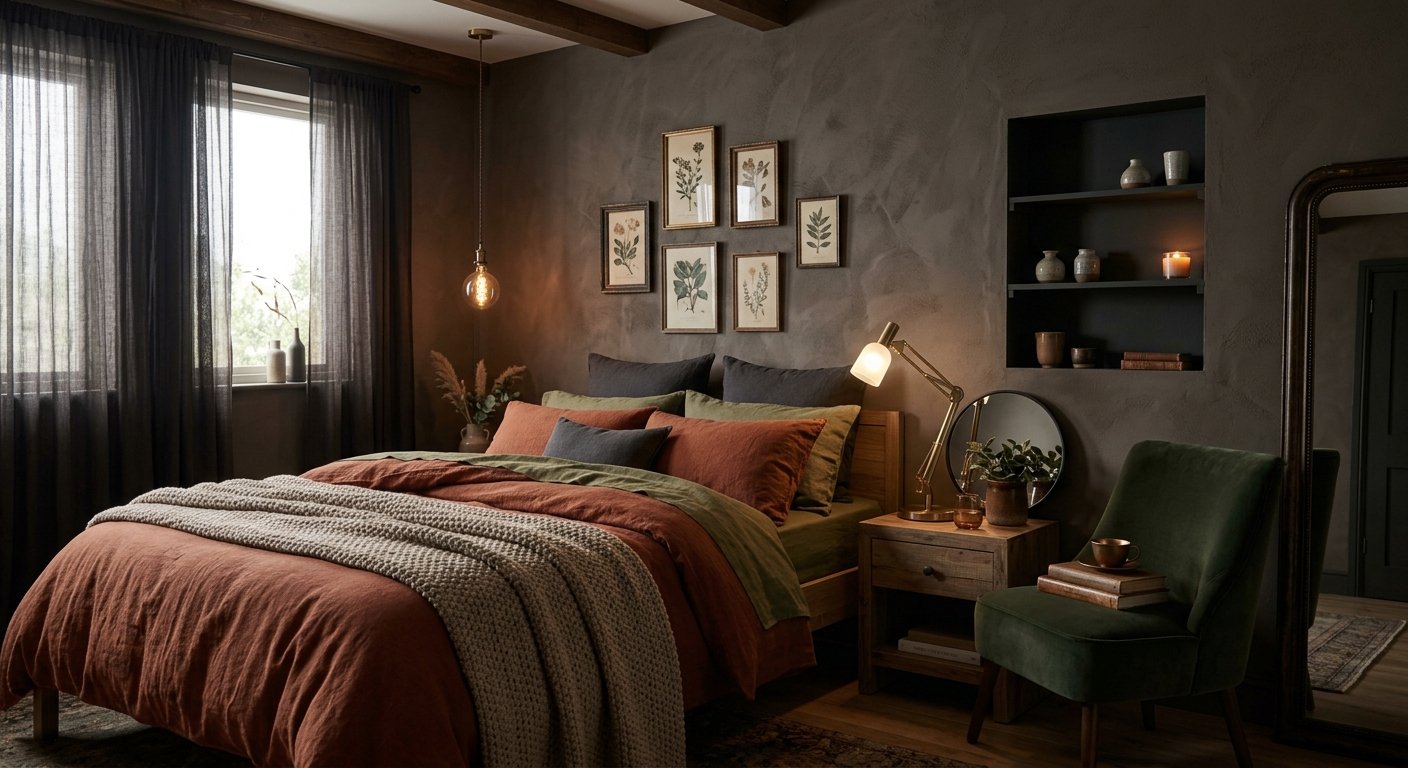
Many people believe that dark, moody design principles should only be used in large, open-concept master suites. There is a common misconception in the home decor world that dark paint colors or heavy textures will make a small room feel like a cramped, claustrophobic box. However, when it comes to compact urban apartments, townhomes, and cozy suburban rooms across the United States, the exact opposite is true. Embracing deep tones in a small space can actually create a high-end dramatic depth that blurs the boundaries of the walls.
Instead of fighting the limitations of a small footprint with basic clinical white paints, lean into the shadows. A small moody bedroom does not look small; it looks intimate, intentional, and incredibly expensive. By using clever lighting balances and strategic styling layouts, you can easily turn your compact bedroom into a luxurious, cozy retreat without breaking your budget.
Why Small Spaces Thrive with Dark Moody Themes
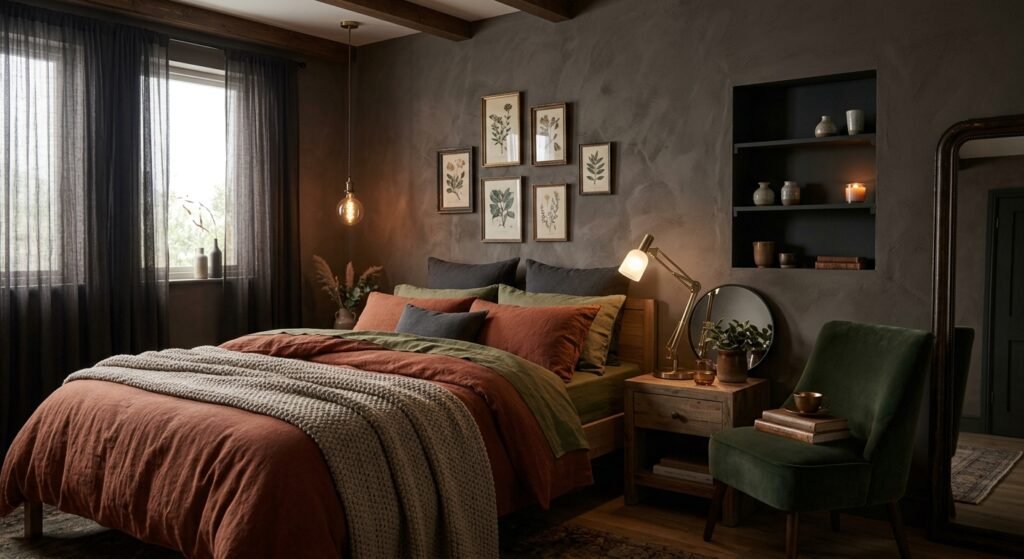
Stark white or pale grey walls in a small room can often highlight the tight corners, making the architecture feel restrictive and plain. Dark, saturated colors wrap the room in a continuous visual landscape. Because dark surfaces absorb light rather than bounce it around harshly, the sharp edges of your corners fade into the shadows, creating an illusion of endless depth.
For an affordable nest setup, this approach acts as an instant shortcut to luxury. It provides a rich background that makes cheap thrift store furniture or basic target finds look custom-made. Let us dive into seven actionable, budget-friendly ways to design a breathtaking moody escape in a small bedroom.
1. Paint the Ceiling and Walls the Same Rich Palette Tone
The ultimate secret weapon to maximize visual space in a small bedroom is color drenching. This means painting your walls, baseboards, and the ceiling in the exact same deep color finish. When your ceiling is left stark white against dark charcoal or midnight blue walls, it creates a harsh horizontal contrast line that visually cuts your room in half, making the ceiling look lower than it actually is.
By extending your rich wall color—such as a velvety slate gray or a deep olive tone—straight up onto the ceiling, you eliminate that visual boundary line. The human eye can no longer tell where the walls end and the ceiling begins. This seamless drenching effect makes a small room look instantly taller, cohesive, and incredibly comforting.
2. Install Vertical Shiplap or Trim and Paint It Dark
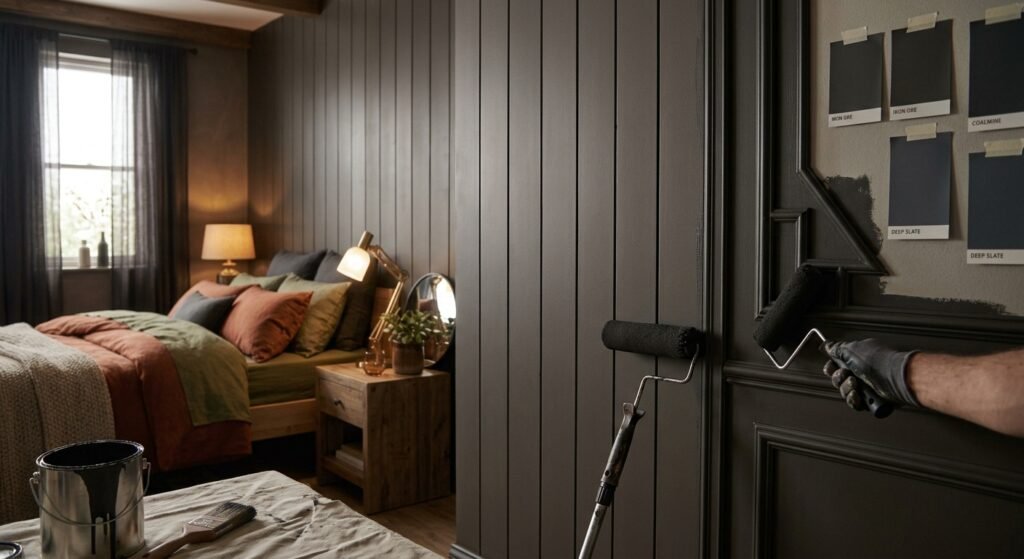
When horizontal floor space is limited, you must guide the eye upwards to emphasize the room’s height. Adding simple architectural wood details to your main accent wall is an incredibly affordable DIY project that delivers high-end custom results.
Purchase a few cheap MDF trim strips or thin vertical shiplap boards from a local hardware store and mount them directly to the wall behind your mattress. Once secure, paint the entire structure in your chosen deep moody color. The vertical lines break up flat drywall surfaces and draw the eyes toward the ceiling, while the dark paint masks any minor cuts or imperfections, creating an elegant boutique hotel vibe for under $50.
3. Position Oversized Sconces to Clear Up Nightstands
In a compact bedroom layout, every square inch of surface space matters. Bulky bedside table lamps with wide fabric shades can completely crowd small nightstands, leaving zero room for your book, glasses, or a glass of water.
To save valuable surface real estate while maintaining rich accent lighting grids, mount two oversized plug-in wall sconces directly above your nightstands. Opt for fixtures with articulated swing arms and matte black or antique brass metal finishes. Position them so they direct their warm light downward onto the mattress. This keeps your side tables completely clutter-free while adding a beautiful, architectural focus to the room.
4. Float a Sleek Wooden Dresser to Expose Floor Space
One of the most important rules of small-space interior design is keeping as much floor space visible as possible. When large, heavy dressers sit flat on the ground, they block the flow of the room and make the footprint feel cramped and heavy.
Instead of a traditional chest of drawers, use a floating wall-mounted wooden console or modify an affordable cabinet into a floating shelf. Elevating your storage just 12 to 18 inches off the ground allows light to pass underneath the unit. Seeing that continuous floor texture trick the brain into thinking the room is wider, giving you essential storage space without cluttering the walking paths.
5. Frame Extended Vintage Florals for Historical Depth
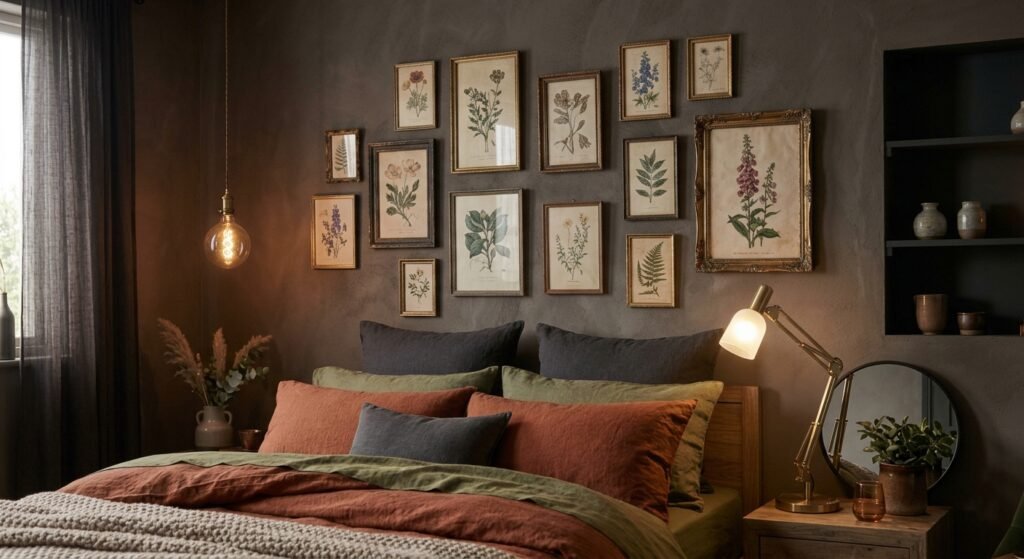
Do not leave your dark walls completely blank, as large empty dark surfaces can sometimes look flat under artificial lighting. Introduce a touch of vintage luxury by hanging extended moody art prints.
Look online for free public domain digital files of moody vintage botanical illustrations or dark oil paintings featuring rich plums, deep maroons, and dark forest backgrounds. Print them out in large formats at a local print shop. Put them into simple black or dark walnut frames and hang them close together. These rich, historic visuals bring incredible character and personality to a dark wall without taking up an inch of floor space.
6. Tuck a Dimmable Sunset LED Strip Behind the Bed Frame
Controlled accent lighting is what separates a beautiful moody room from a dark, uninviting cave. In a compact layout, hidden indirect light paths can create a mesmerizing sense of open depth.
Run a dimmable, warm-white smart LED strip light along the back edge of your headboard or underneath the bottom edge of your floating bed frame. When turned on in the evenings, the light casts a soft, low-glare halo wash onto the back wall and floor. This indirect glow creates an incredible floating silhouette effect, making your bed frame look weightless and adding multi-dimensional depth to tight quarters.
7. Keep Textures Monochromatic and Highly Saturated
When you mix too many different high-contrast colors in a small room—like bright red pillows on top of a dark gray bed next to a bright yellow rug—the space can look visually cluttered, loud, and chaotic. To keep a moody sanctuary relaxing, stay within a tight, saturated color group.
If your walls are painted a deep forest green, select a washed cotton or linen duvet cover in a rich olive or dark sage tone. Layer it with a heavy waffle blanket in a deep charcoal or spruce color. Keeping your soft textiles within the same deep color family maintains a clean visual flow, allowing the different structural textures to catch the subtle evening shadows without overwhelming your eyes.
Conclusion: Creating Your Small Safe Haven
Designing a small moody bedroom aesthetic is all about shifting your perspective on small spaces. By stepping away from stark white walls and confidently embracing deep color drenching, smart vertical architectural details, and soft, indirect lighting systems, you can easily turn the smallest room into a beautiful, luxurious oasis.
Focus on the small details, keep your surfaces clutter-free, and enjoy building a cozy safe haven that feels like a premium luxury escape every single night.